

There's a particular kind of disappointment that comes along when buying your first crystal singing bowl, unboxing it, striking it, and getting... a dull thud rather than that long, ringing hum you heard in every video. If that's you right now, take a deep breath. It's not the bowl. It's almost always technique, and technique is fixable within a week or two of practice.
I've watched enough beginners struggle with this to know the problem is rarely the equipment. When it's about struggling with crystal singing bowl mallet technique, it's grip, angle, pressure, and patience, in roughly that order.
Striking vs Rimming: Two Completely Different Skills
People often assume there's just one way to "play" a bowl. There isn't. You've got two different techniques for playing a crystal singing bowl, and they produce sounds that don't even sound related.
Striking offers you a single clean tone, a bell-like ring that rises and then naturally fades away. It's what you'd use to open a sound bath session, or to mark a transition, signaling "we're starting now."
Rimming, sometimes known as singing the bowl, is the technique behind that long, sustained hum crystal bowls are known for. This one takes actual practice. If you've only tried it once or twice and gave up, you're in good company, most people need several short sessions before it clicks.
Already played a metal bowl before? Don't expect the same response here, because the way crystal responds to pressure and angle is quite different, as we explain in our guide to crystal vs Tibetan singing bowls.
How to Strike a Singing Bowl the Right Way
- Hold your mallet the way you'd hold a pencil, not a hammer. Gripping too tight may lead to killing the vibration before it has a chance to build.
- Aim for the outer rim. Strike at roughly a 45 degree angle, about a third of the way down from the top edge. Don't strike straight down onto the flat top surface, that's a rookie mistake and it beats out the tone completely.
- One confident tap beats five hesitant ones. A firm strike with a quick bounce-off produces a much richer tone than a soft, unsure tap.
- Then just... wait. Let the sound decay on its own. Most people skip the crystal bowl beginner technique and rush to strike again too soon, and honestly, the listening part is half the practice.
Rimming Technique: Where the Suede Mallet Comes In
This is the part everyone wants to skip ahead to, and also the part where patience actually pays off. If you wish to learn about how to use a suede mallet, read on.
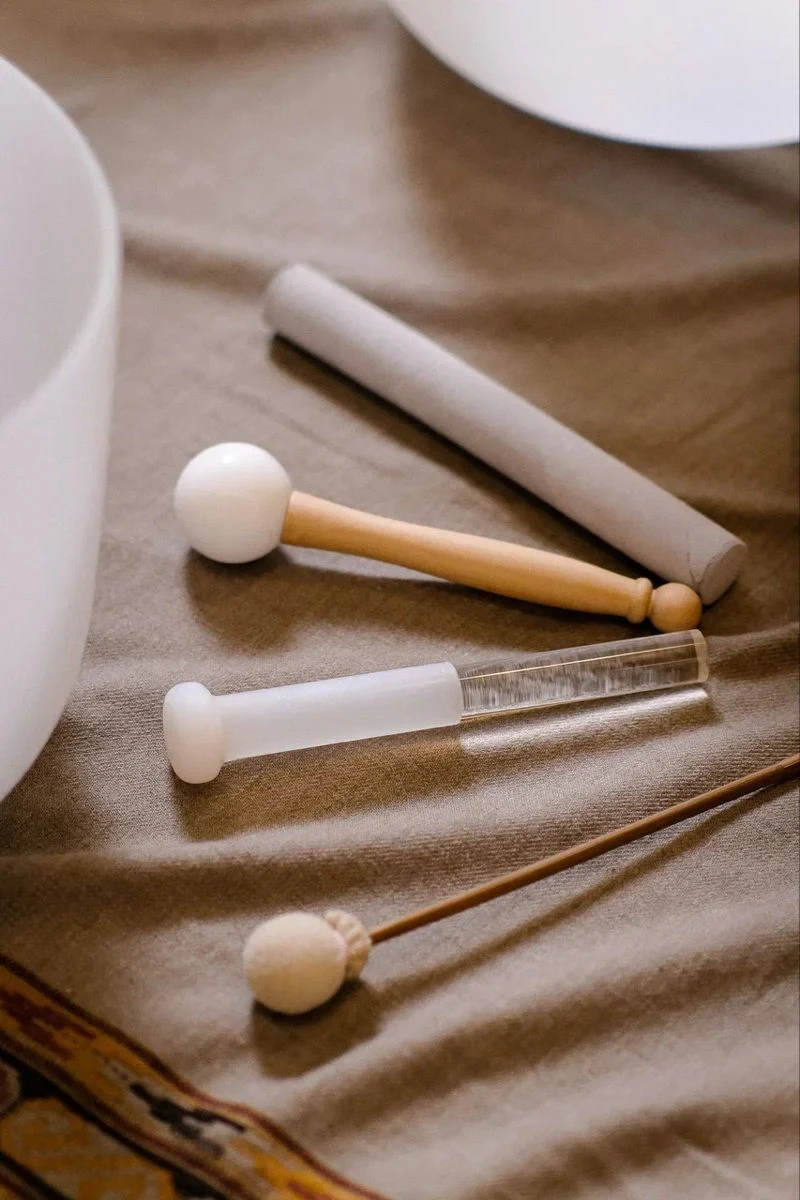
Start by positioning your suede mallet against the outer rim at close to a 90 degree angle. Not flat, not tilted way over, just upright against the edge.
Pressure is where most people go wrong. You wish for light, even contact, more of a guiding touch instead of a press. Push too hard and you'll get squeaky friction noise rather than a tone, which is irritating but also a very normal aspect of the learning curve.
Move in wide, slow circles across the rim. Keep the contact constant, don't lift off and reposition mid circle. And resist the urge to speed up right away, that's genuinely the number one mistake beginners make. Let the tone build first at a slow pace, then gradually pick up speed once you actually hear it forming.
Try to move from your whole arm rather than just flicking your wrist. A stiff wrist is usually the hidden reason the bowl just won't "catch." Once you've got a hum going, you can actually ease off the pressure a bit and let the bowl mostly sustain itself, just gently reinforcing the motion here and there.
Common Mistakes That Kill Your Tone
- Wrong mallet size for your bowl. Too small and there's not enough friction surface, too large and precision goes out the window. Match it roughly to the bowl's diameter.
- Inconsistent pressure around the rim. Push harder in one spot, lighter in another, and you'll get a wobbly, uneven tone instead of a smooth hum.
- Rushing the circular motion. Said it above, saying it again because it's that common.
- Playing on a wobbly or unstable surface. Bowls need a proper cushion or stand underneath them. A shaky table absorbs vibration you're trying to build.
- Hand moisture affecting grip. Interestingly, slightly damp palms often help with rimming, while overly dry skin tends to create unwanted friction squeaks.
A Practice Routine You Can Actually Stick To
Ten minutes, broken into three parts, works better than one long unstructured session on how to play a crystal singing bowl:
- Strike once, let it fully die out, just listen (2 minutes). Sounds too simple to matter, but it trains your ear.
- Practice rimming, wide slow circles, focus purely on consistency, not volume (5 minutes).
- Once you've got a credible hum, try shifting from a strike straight into a rim on the similar note (3 minutes).
Try it for a week of short daily sessions and you'll come across a real, tangible jump in control. This is honestly closer to learning an instrument than most people expect going in.
Once your technique feels steady, it helps to understand what these tones are actually doing. Our guide on how sound healing works covers the practice behind the sound. And if you're still looking for a bowl to practise on, our single crystal bowls are a good place to start.
FAQ
Why won't my crystal bowl make a sound when I try to rim it?
Nine times out of ten it's due to pressure and speed. Pressing too hard, or moving too fast before the tone has even had a chance to build, halts the friction from turning into a sustained hum. Slow everything down and then lighten your touch.
What size mallet should a beginner buy?
Match it roughly to your bowl's size. A medium suede mallet usually handles standard 8 to 10 inch bowls better. If you're still unsure, just figure out with the seller what they'd suggest for your specific bowl.
Do I need a wooden mallet, or is suede enough?
For beginners, suede is really the better choice, softer strike tone and it's what you need for rimming anyway. Wooden mallets give a sharper, more percussive strike and tend to be a more experienced player's tool.
How long before I can rim a bowl properly?
Most people get a consistent hum within their first handful of sessions, and genuinely comfortable, controlled technique within one to two weeks of short regular practice.
Can I damage the bowl by playing it wrong?
Pretty unlikely with normal striking or rimming. The actual risk to a crystal bowl is dropping it or knocking it against something hard, not technique errors.
Do I need to clean the bowl or mallet after each use?
Wipe the rim occasionally with a soft dry cloth, hand oils build up over time and can dull the tone. Suede mallets don't need much upkeep at all, just keep them away from moisture.





.5623a955.svg)


.b76148b1.svg)