
A colleague of mine spent years dismissing sound healing as "spa music for people who can't sit still long enough to meditate."
Then his wife dragged him to a sound bath.
He doesn't dismiss it anymore. He goes every few weeks now and describes it as the only thing that reliably gets his brain to shut up for an hour. He still can't fully explain what happens. Neither can most people who experience it.
That gap between experience and explanation is actually part of what makes sound healing interesting. Crystal Bowl Studio works with this practice every day, and we still find it worth thinking carefully about. So here's our honest attempt to explain it.
What Is Sound Healing?
At its simplest: using sound with intention to help people feel better, physically, mentally, emotionally.
Not background music. Not ambience. Intentional sound, chosen and played with care, designed to create a particular quality of experience in the person receiving it.
Healing music instruments may vary depending on what you are looking for. Sound healing goes by different names. Sound therapy. Sound meditation. Vibrational sound healing. Sound bath. The terminology depends on who you're talking to and what tradition they come from. The core idea doesn't change much across any of them.
And it's genuinely old. Not wellness-trend old. Ancient. Tibetan monks built their chanting practices around resonant spaces. Aboriginal Australians used the didgeridoo in healing ceremonies for thousands of years. Greek temples were designed with specific acoustics in mind.[1] The recognition that sound does something to people, that it changes how the body and mind feel, shows up independently across cultures and centuries in a way that's hard to dismiss.
Today sound healing therapy looks different. Studios, clinics, yoga spaces, hospitals. Crystal singing bowls alongside traditional instruments. People with no particular spiritual framework trying it out of simple curiosity. The context has shifted.
How Does Sound Healing Work?
Let's take this apart properly.
Sound is a physical event. Not just an auditory one. When a gong or a crystal singing bowl is played in a room you're in, the vibrations travel through the air and into your body. Your body is made up of at least 70% water. Vibration travels through the water and your tissues vibrate. This is not a metaphor or a spiritual claim. It's basic physics.
The nervous system has opinions about sound. Slow, sustained, harmonically rich sounds tend to push the body toward parasympathetic mode. Rest. Recovery. The opposite of stress response. Heart rate slows. Breathing changes. The body moves toward a state it usually only reaches in deep sleep. This direction of effect is documented.[2] The specific reasons why certain frequencies produce it more reliably than others are still being worked out.
The mind gets something to do that isn't thinking. This is underrated as a mechanism. One reason people struggle with conventional meditation is that sitting quietly with nothing to focus on gives the analytical brain no task, so it invents one, usually a to-do list or an old argument. Sound healing meditation gives the brain something to track that doesn't require thought. You follow the tone. Your thinking mind quietly clocks off.
How do healing frequencies work? Different frequencies feel different. Low, slow frequencies feel grounding and heavy. Higher ones feel cleaner and more alert. A skilled practitioner moves through a range of these deliberately, creating a kind of acoustic arc through a session. Your body responds to each differently.
Entrainment. Real phenomenon. When two rhythmic systems are near each other, the weaker one tends to synchronise with the stronger one. Your heart rate, breathing, and brainwave patterns are rhythmic. Sustained, strong external rhythms and tones may pull these toward particular states.[3]
What Is a Sound Healer?
Someone who uses sound as a tool in service of other people's wellbeing. That's the job description.
What it looks like in practice varies enormously. Individual sessions with instruments placed near or on the body. Group sound baths for twenty people lying on mats. Sound combined with breathwork or guided imagery. Sound completely alone, without any other intervention.
What a sound healer is not: a medical professional. A therapist. Someone who can make clinical guarantees about outcomes. The responsible ones are very clear about this. Sound healing is complementary, meaning it works alongside conventional healthcare, not instead of it. A practitioner who tells you their sessions will fix a specific diagnosis is making promises they have no business making.
Things that are actually worth checking before booking:
- Do they have training from a recognised program?
- Can they explain clearly what they do and don't offer?
- Do they have an intake process for people with health conditions?
- Do they respond well to questions, or do they get weird about being asked?
The field is growing fast and accreditation hasn't caught up. Asking is fine. Any practitioner worth working with will welcome it.
Common Sound Healing Techniques
The format varies more than most people realise.
Sound baths. The most widely practiced version. You lie down, the practitioner plays instruments around the room, you receive passively. Sessions range from twenty minutes to ninety. No experience required. Good starting point.
Sound meditation. Single instrument, usually a crystal singing bowl, used as the focus of a meditation practice. The tone gives the mind something to anchor to. Useful for people who find silent meditation difficult and want to experience sound meditation benefits.
Individual sessions. One practitioner, one person. More tailored. More responsive. The practitioner can adjust to what they observe in real time. Often used in therapeutic contexts where a group format doesn't suit.
Breathwork alongside sound. Specific breathing patterns combined with sound environments. The two reinforce each other. Can produce quite deep states faster than either approach on its own.
Chakra-based sound practices. Traditions that work with the body's energy centres use specific notes associated with specific areas. Practitioners working this way make deliberate choices about frequency and timing.
The pauses. This surprises beginners every time. The silence after a tone fades is part of the technique, not just dead air. Good practitioners use it intentionally. The contrast between sound and silence creates something neither produces alone.
Healing Instruments Used in Sound Meditation
Healing through sound has more variety than most people expect going in.
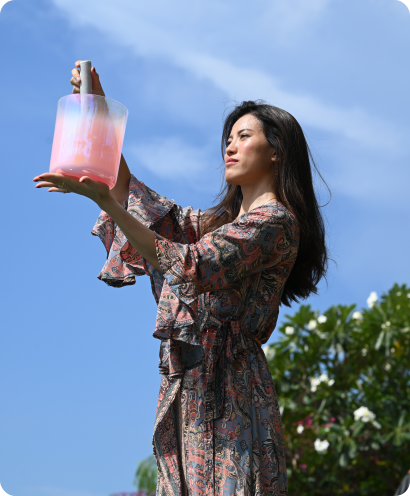
Crystal singing bowls. Quartz crystal, heated and shaped. Produce a sustained tone when played with a mallet. Felt physically in the body as much as heard with the ears. Different sizes produce different notes. The instrument most associated with contemporary sound healing.
Tibetan singing bowls. Metal, traditionally a mix of alloys. Warmer and harmonically more complex than crystal bowls. Different tradition, different character. Widely used in Buddhist practice.
Gongs. Large. Loud. Dense with overtones. A gong bath is an intense experience, a lot of sound at once, and is often used for deep releasing work. Not the best choice for first-timers who are sensitive to volume.
Tuning forks. Calibrated metal forks struck and held near the body or placed on specific points. More precise than bowl-based instruments. Used by practitioners doing targeted frequency work.
Chimes and bells. High, light frequencies. Often used to open or close a session or as transitions between heavier instruments.
Frame drums. Rhythmic rather than tonal. Different quality of experience. Used in some traditions for grounding work.
Voice. Toning, chanting, overtone singing. The oldest healing instrument humans have and probably the most underestimated. The voice produces vibration directly inside the body of the person using it, which nothing external can replicate.
Crystal pyramid instrument. Quartz crystal shaped as a pyramid. This healing device produces a clear, focused tone with a distinctive harmonic quality. Used by practitioners who work with sacred geometry and specific frequency applications. Less common but worth knowing about.
Chakra healing instruments. Usually refers to note-specific instruments, often crystal singing bowls, calibrated to frequencies associated with particular energy centres of the body. Used in traditions that work with the chakra system.
Sound Healing Benefits
Honest version: the research base is real but still developing.[4] Some of what practitioners see and clients report is well-supported by broader science. Some of it is still in the territory of consistent anecdote rather than proven mechanism. Worth being clear about that rather than overclaiming.
With that said, here's what comes up consistently:
Relaxation that's hard to access any other way. People describe the physical state during a sound bath as more complete than what they get from sleep or conventional rest. The nervous system response to sustained harmonic sound seems to produce something distinctive.
Mental quiet. The internal commentary slows or stops. For people with very active minds who have tried and failed at silent meditation, sound vibration healing is often the thing that finally works.
Emotional release. Emotions sometimes surface during sound sessions. Not always. Not for everyone. Not dramatically. But often enough that practitioners expect it and create space for it. It tends to feel like relief rather than distress.
Sleep. People who attend regularly often report improvement in sleep quality through sound and healing. Whether this is cumulative or a direct effect of how sessions leave the nervous system is hard to say cleanly.
Body awareness. Sound vibration draws attention into physical sensation in a way that many head-based practices don't. Feeling sound move through you teaches you something about where you hold tension.
Clarity. A hard one to pin down but consistently reported. People leave sound healing sessions with a quality of focus and presence that's different from how they arrived.
None of this is a promise. Sound healing is not treatment for any medical or psychological condition. It's a practice that many people find genuinely useful for accessing rest and stillness.
What Happens in a Sound Healing Session?
First timers always want to know this. Fair enough.
Getting there. Arrive a few minutes early. Shoes off. Find a mat. Layer up even if the room is warm, because the body cools during deep rest and being cold pulls you out of it.
The intro. Most practitioners take a few minutes at the start to explain the format and give simple guidance. Usually something like: you don't need to do anything except receive. There's nothing to achieve.
Lying down. Usually on your back. Props under the knees are common. Eye pillows help a lot of people settle.
The sound starts. First few minutes can feel a bit much as your brain tries to categorise and analyse what it's hearing. This usually settles. Give it ten minutes before deciding how you feel about it.
What happens next varies completely. Some people fall asleep. Some stay alert but very still. Visual experiences, physical sensations, emotions, memories, complete blankness. All of these are normal. None of them are required or wrong.
The close. Good practitioners bring the session down gradually. Softer sounds, longer silences, a quiet verbal cue. Sitting up too fast from a deep sound state doesn't feel great. Take your time.
After. Water. Slow movements. Give yourself an hour before doing anything that requires a lot of you. Some people feel energised. Some want to be quiet. Both responses are completely normal.
How to Choose a Sound Healing Experience Near You
Searching sound healing therapy near me gives you a lot of options. Here's what to actually pay attention to.
The practitioner over the venue. Nice space, good photography, slick booking system: none of that tells you about the person you'll be in a room with. Find out about their training and how they talk about their work.
Format matters. Group sound bath, individual session, workshop. These are genuinely different experiences. Think about what you're actually looking for before booking.
How they describe their work. Overclaiming is the main red flag. Anyone promising specific outcomes or making clinical-sounding statements about what sound healing will do for you is getting ahead of the evidence.
What instruments they use. If crystal singing bowls are what drew you in, confirm they're part of the session. Practitioners vary widely in what they use.
First session nerves. Normal. Expected. A practitioner who acknowledges this and makes space for not knowing what you're doing yet is usually a good sign.
Final Thoughts
My colleague who dismissed sound healing for years and now goes every few weeks: he doesn't have a spiritual framework for it. He doesn't particularly care about frequencies or chakras or any of that. He just knows that for an hour, his mind stops doing the thing it does constantly, and he comes out the other side feeling more like a human and less like a to-do list.
That's enough of a reason to try it.
At Crystal Bowl Studio, sound healing and the instruments that support it are what we've built everything around. Crystal singing bowls, how they're made, how they're played, and what they do to the people in the room with them. If you're exploring sound healing for the first time or deepening a practice you've had for years, we're here for both.
Go try a session. See what happens.
Frequently Asked Questions
What is sound healing?
The intentional use of sound to support relaxation, mental stillness, and a sense of wellbeing. Practitioners use instruments like crystal singing bowls, gongs, and tuning forks to create a sound environment that helps the nervous system move toward rest. Sessions are usually done lying down. It's not a medical treatment but a complementary practice that many people find genuinely useful alongside other approaches to health and wellbeing.
How do healing frequencies work?
Healing with sound is real because sound travels as physical vibrations through air and into the body. Different frequencies produce different felt experiences: low frequencies tend to feel grounding and heavy, higher ones feel cleaner and more alert. Sustained harmonic tones appear to support the parasympathetic nervous system, the body's rest-and-recovery mode. A phenomenon called entrainment, where rhythmic systems in proximity tend to synchronise, is also thought to play a role. The research is still developing in its specifics but the general pattern is consistent with what practitioners and clients observe.
Is sound healing therapy the same as medical treatment?
No. Sound healing is a complementary practice, not a clinical one. It doesn't diagnose, treat or cure medical conditions. Responsible practitioners are clear about this distinction. It can sit usefully alongside conventional healthcare but it doesn't replace it. If you have a health condition, mentioning it to a practitioner before a session is sensible, but sound healing is generally accessible to most people.
What instruments are used in sound healing?
Crystal singing bowls and Tibetan singing bowls are the most commonly used. Beyond those: gongs, tuning forks, chimes, frame drums and the voice all feature in different practitioners' work. Some work with less common instruments like the crystal pyramid, a quartz instrument with a focused tonal quality. Chakra healing instruments, usually note-specific crystal bowls, are used in traditions that work with the body's energy centres. What you experience depends entirely on the practitioner and their training.
Can beginners try a sound healing session?
Yes, and most sessions are specifically designed for people with no prior experience. There's nothing to learn beforehand and nothing to do during except receive. A group sound bath is usually the easiest starting point: low commitment, no experience needed, just show up and lie down. A lot of people who have struggled with conventional meditation find sound healing surprisingly easy to settle into on their first try.
References
[1]. Historical and ethnomusicological accounts of sound-based ceremonial and contemplative practices in Tibetan Buddhist, Aboriginal Australian, and ancient Greek traditions.
[2]. Goldsby, T. L., Goldsby, M. E., McWalters, M., & Mills, P. J. (2017). Effects of Singing Bowl Sound Meditation on Mood, Tension, and Well-being: An Observational Study. Journal of Evidence-Based Complementary & Alternative Medicine, 22(3), 401–406. Stanhope, J., & Weinstein, P. (2020). The human health effects of singing bowls: A systematic review. Complementary Therapies in Medicine, 51, 102412.
[3]. Kim, S.-C., & Choi, M.-J. (2023). Does the Sound of a Singing Bowl Synchronize Meditational Brainwaves in the Listeners? International Journal of Environmental Research and Public Health, 20(12), 6180.
[4]. Stanhope, J., & Weinstein, P. (2020). The human health effects of singing bowls: A systematic review. Complementary Therapies in Medicine, 51, 102412.




.5623a955.svg)


.b76148b1.svg)