
What Are Crystal Singing Bowls?
Quartz crystal, crushed and heated until it fuses, shaped into a bowl.
Run a mallet around the rim and something happens that's hard to explain before you've heard it. The tone doesn't just play and stop. It builds, sustains, and spreads outward. People say they feel it more than hear it. There's actual research behind that feeling — see The Benefits of Crystal Singing Bowls: Science, Sound, and Stillness.
That sounds like wellness marketing until you're actually sitting next to one.
They show up everywhere now. Sound baths, yoga studios, therapy rooms, bedrooms. If you're exploring sound healing in Singapore, chances are you've already sat next to one in a studio session. One bowl, played well, can carry an hour-long session without anything else. That kind of simplicity is part of why so many practitioners build their work around them.
What trips people up at the buying stage is that frosted and clear aren't just different looks. They come from different processes, behave differently when played, project sound differently, and suit different contexts. Once you know what each one is actually good at, the decision gets a lot easier, and for most people building a practice today, that decision increasingly points toward clear.
Frosted vs Clear Crystal Singing Bowls
Before the detail, the overview.
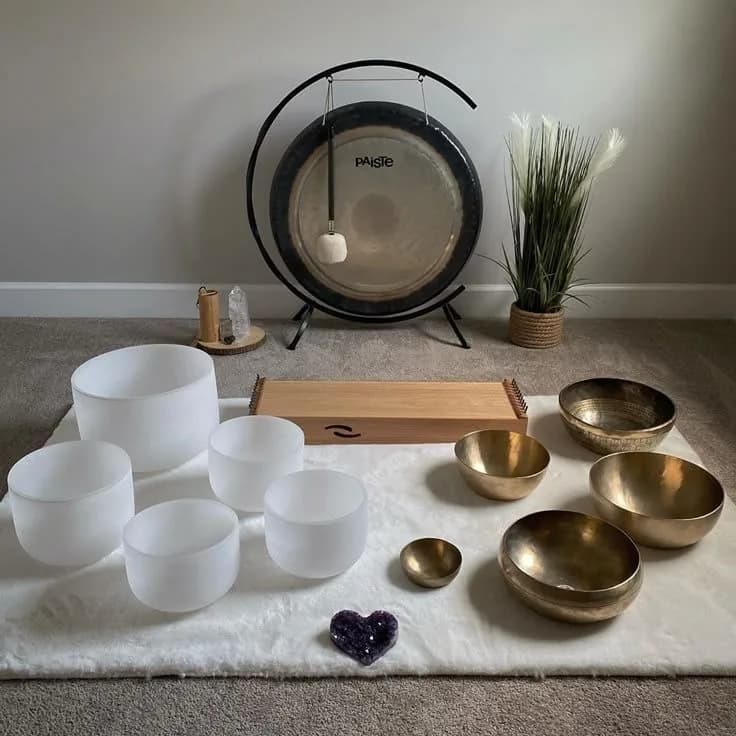
Frosted crystal singing bowls look like thick white frosted glass. Opaque, matte, heavy. Made by fusing quartz crystals together under high heat, which is why the surface has that slight texture. Bigger on average, louder, forgiving to play, and the more budget-friendly option.
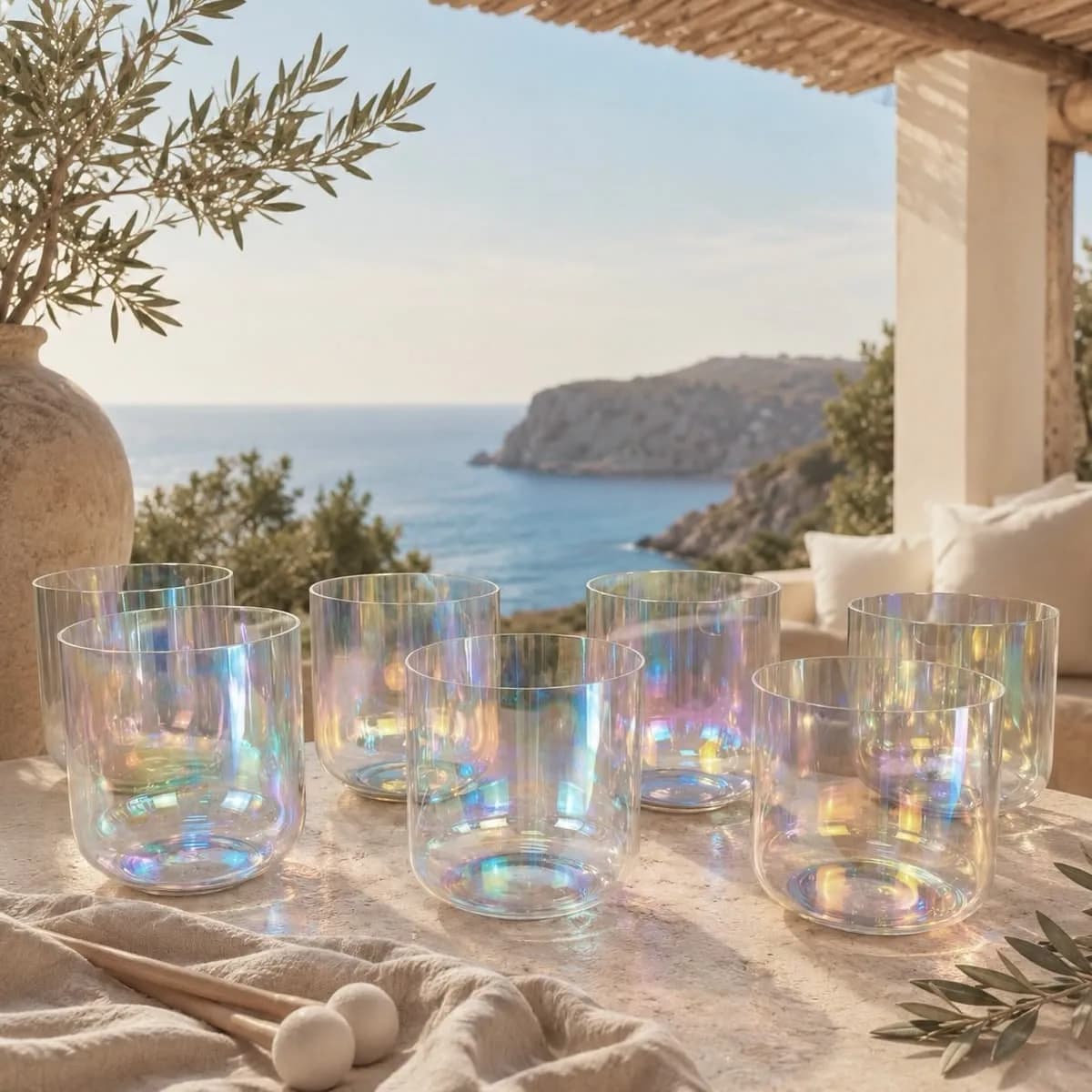
Clear crystal singing bowls are see-through, made from higher purity quartz through a more refined process. This is where the real craftsmanship shows. The tone is more precise, the harmonics separate out beautifully, and the bowl itself becomes a visual centerpiece in any room it sits in. Lighter, more travel-friendly, and the bowl most practitioners upgrade to as their practice deepens.
Same material at the base. Very different experience in practice, and very different ceilings.
Difference Frosted vs Clear Crystal Singing Bowls
Sound. Frosted bowls produce a broad, warm tone that spreads outward and fills a room, with rich overtones that blend together rather than separate. Clear crystal singing bowls are tonally sharper and more defined. The harmonics stack in a way you can actually pick apart, note by note, especially in a quiet room. Players reach for the word "crystalline" to describe this, and it holds up once you hear it side by side with frosted.
Volume and control. Frosted bowls are louder by nature, simply from size and density. But volume isn't the same as control, and this is where clear pulls ahead. A clear bowl sustains at lower, gentler volumes without the tone falling apart, which gives a skilled player far more to work with. Smaller, lighter, easy to carry, and precise in a way that rewards attention rather than just muscle.
Look and finish. Frosted is matte white and opaque, calm-looking, understated. Clear is where things get dramatic. Light moves through the bowl, and when it resonates you can sometimes see subtle visual movement inside it. In a studio, a home altar, or anywhere the aesthetic matters, clear does something frosted simply can't. A lot of practitioners choose clear specifically because the bowl itself becomes part of the atmosphere, not just the sound.
Ease of playing. This is the one honest trade-off. Frosted has a textured surface that grips the mallet, so a sustained tone comes quickly with almost no technique. Clear has a smoother, glass-like surface, so it takes a bit more experience to find the right pressure. The technique clear rewards is exactly the technique that makes a player better over time, and most people who stick with it say the extra effort pays off quickly.
Best use cases.
A note on getting started. Frosted is the easier first few minutes. Clear is the better long-term choice for almost everyone else. Clear bowls are also lighter and easier to travel with, which matters if you move between spaces or bring your practice on the road. Many practitioners now start directly with clear, for its convenience, rather than buying frosted first and upgrading later. It saves money in the long run and means you're learning on the bowl you'll actually keep using.
What Are Frosted Crystal Singing Bowls?
The manufacturing process is what creates the texture. Silica quartz crystals fused together under extreme heat, leaving a surface that's slightly rough.
Size range runs large, generally from around 6 inches to 24 inches in diameter. Bigger bowl, lower note, more room-filling sound. Projection is strong too, since dense material throws sound powerfully across a space, and the walls tend to be thicker and more durable in daily handling.
Where frosted genuinely earns its place is price and that first-minute ease. It's the more accessible option, and for someone who wants to feel an immediate result before committing further, it does the job. The tone is warm and grounding, broad rather than defined, and it wraps around a room instead of cutting through it.
What Are Clear Crystal Singing Bowls?
Higher purity quartz, a more refined process, a transparent result. In person, a clear quartz bowl looks like it was carved from thick glass. You can see straight through it, and when it resonates, light behaves differently around it. In a studio with good lighting, these are genuinely beautiful objects, not just instruments.
The tonal definition is the headline feature. Cleaner material means a more precise tone, with harmonics that are easier to pick apart from each other. Practitioners who work with specific therapeutic frequencies, or who care about clean musical intervals between bowls in a set, tend to gravitate here for a reason.
Where frosted fills a room, clear goes deep. More contained, more intimate, more expressive once your hand knows what it's doing. And that expressive range keeps growing as your technique improves, which is more than can be said for frosted. Skilled players get subtlety out of a clear bowl that a frosted bowl simply doesn't have the range to produce.
Clear bowls are lighter and easier to travel with, which matters if you move between spaces or bring your practice on the road. Yes, they ask a little more of you at the start and a little more care in handling. Most practitioners who make the switch say that's a small price for what the bowl gives back.
Which Bowl Is Better for Beginners?
Frosted still gives you the fastest first result. The surface friction means the mallet grips, you feel the connection immediately, and a sustained tone happens without much technique. If your only goal is an easy first ten minutes, frosted delivers that.
For a full breakdown of every factor — size, note, budget — see our How to Choose a Crystal Singing Bowl guide.
But a growing number of practitioners now recommend starting with clear, or building a set that includes both from day one. The reasoning is simple: clear is the bowl most people end up wanting anyway, so the "easy start" of frosted often just delays the real learning curve rather than avoiding it. Starting with clear means every hour of practice builds the skill you'll actually keep using.
The strongest setup for most beginners is a mixed set, frosted for the immediate warm-up feel and clear for the tonal depth that carries a practice forward. Shop our Foundation Set for Beginners.
Which Bowl Should You Choose for Sound Baths, Yoga or Home Meditation?
Group sound baths. Frosted gives you volume without effort, which matters when the room is full. But more sound bath practitioners are building their signature sets around clear bowls for the depth and definition participants notice, especially in quieter passages of a session. A combination works best: frosted to open the room, clear to carry the finer moments. Shop our Frosted & Clear set.
Yoga classes. Frosted is still the practical choice for cutting through a room mid-transition. That said, teachers building a more refined practice are increasingly layering in a clear bowl for the closing moments of class, where the sharper tone helps students settle into stillness.
Private healing sessions. This is where clear crystal singing bowls are the clear recommendation. One person, a small room, a focused session. The refined, intimate quality of a clear bowl creates something a frosted bowl doesn't reach here. Most experienced practitioners who work one-on-one keep clear as their primary instrument for exactly this reason.
Personal home meditation. Clear is the better long-term fit for most home practices. Smaller rooms don't need the projection frosted is built for, and the tonal refinement of clear rewards the kind of quiet, repeated practice home meditation actually is.
Playing alongside instruments. Clear, without much debate. The defined tone means less frequency muddiness against a guitar or piano, and the extra technique it demands is worth it if you play with other musicians at all.
Final Thoughts
At Crystal Bowl Studio, the conversation with first-time buyers almost always comes down to two things: what are you actually going to do with this bowl, and what kind of space are you in? For most people building a lasting practice, that conversation ends with a clear bowl in the collection, often alongside a frosted one rather than instead of it.
Still not sure? Talk to us. Easier to figure out with a real conversation.
Frequently Asked Questions
What is the main difference between frosted and clear crystal singing bowls?
How they're made, and what that does to the sound and the playing experience. Frosted bowls are fused under heat, giving a matte white finish, a warm broad tone, and a surface that's easy to pick up quickly. Clear bowls use higher purity quartz through a more refined process, producing a transparent finish, a more precise and defined tone, and a smoother surface that rewards proper technique. Same base material, very different results, and very different ceilings for where your practice can go.
Are frosted crystal singing bowls good for beginners?
They're a fine starting point if you want an easy first few minutes. The texture gives the mallet something to grip and a sustained tone comes quickly. But plenty of beginners now start directly with a clear bowl, or a mixed set, since it means every hour of early practice builds toward the sound most people end up wanting anyway.
Are clear crystal singing bowls better than frosted bowls?
For tonal precision, versatility across private sessions, home meditation, and playing with other instruments, yes, clear is the stronger overall choice for most practitioners. Frosted still holds its own for large group settings where sheer volume matters most. Many experienced practitioners keep both, but when asked which one they'd choose if they could only own one, a growing number say clear.
Which crystal singing bowl is better for sound baths?
For very large groups, frosted's projection is hard to beat. Frosted are heavier and denser. For smaller groups, private sessions, or sound baths built around a more layered, intentional listening experience, clear is increasingly the practitioner's choice. Clear is lighter and sound goes deeper and longer. A lot of sound bath sets now lead with clear and use frosted to support it, rather than the other way around.
Can I use frosted and clear crystal bowls together?
Yes, and they pair beautifully when the notes are compatible. A common approach is frosted to open a session with warmth and volume, then clear bowls to carry the quieter, more focused moments that follow. Building toward a set that leans clear, supported by frosted, is the direction most practitioners' collections naturally grow in.
Crystal Bowl Studio | Premium Crystal Singing Bowls for Meditation, Yoga & Sound Healing Explore our full collection of frosted and clear crystal singing bowls and find the one that fits your practice.



.5623a955.svg)


.b76148b1.svg)