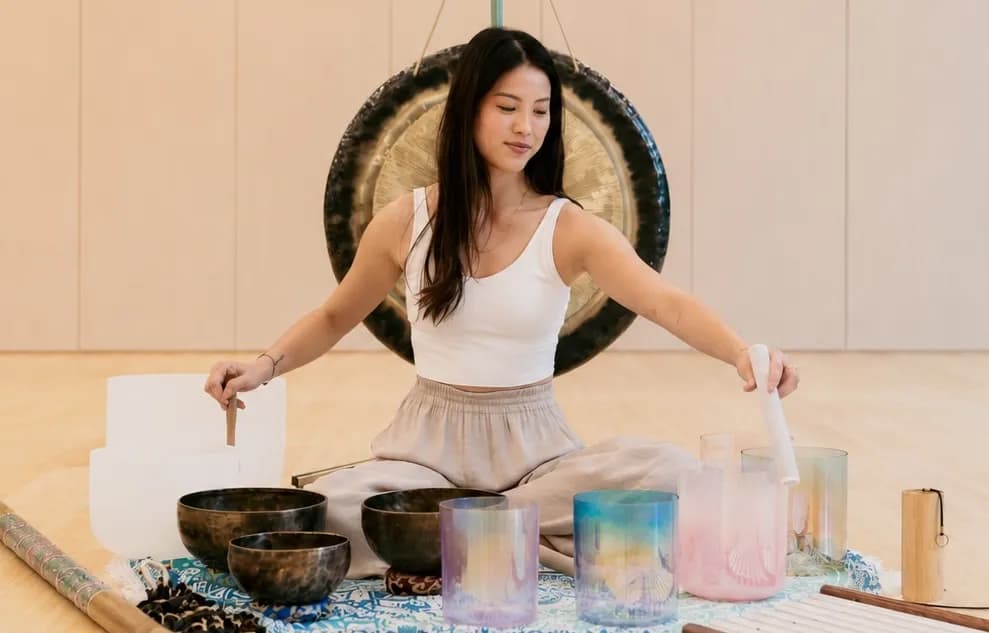

Choosing the right crystal singing bowl can feel overwhelming at first. Frosted white bowls, some almost chalky, sit next to ones that are perfectly transparent and clear, and the sizes span an absurd range — small enough to cradle in one arm, large enough that you'd need both hands and some commitment. Pick up a mallet, circle it around a rim, and the sound that comes back makes the decision feel suddenly weightier than expected. It doesn't need to be that complicated. Knowing how to choose a crystal singing bowl is mostly about asking the right questions in the right sequence — starting with purpose, then material, then size, and finally how each bowl's frequency and therapeutic benefits fit the practice you want to build.
Start with Purpose
The material and size questions come second. What comes first is the simplest one: what is this bowl actually for?
A bowl used for personal daily meditation has different requirements than one carried to public sound baths or deployed in clinical one-to-one sessions. Personal bowls can be smaller, lighter, higher in pitch. Easier to manage, easier to store, easier to sustain alone in a quiet room. Professional-use bowls need more projection, longer sustain, and usually lower tones that carry through a group space. That generally means larger diameter, thicker walls, and more physical weight to manage.
Answering this first eliminates a significant portion of the crystal singing bowl buying guide variables before you've even touched one.
Frosted vs Clear Quartz Singing Bowl: The Core Decision
The frosted vs clear quartz singing bowl distinction is the most consequential material choice in the buying process. Get this right and most other decisions follow naturally.
Frosted Crystal Singing Bowls
Frosted bowls start as crushed quartz, fused under extremely high heat. The result is opaque, matte, slightly powdery to the touch: heavier and less visually dramatic than clear quartz, but more physically robust. The tone is warm and full, with a richness that many practitioners describe as immediately grounding. They are consistently considered the best crystal singing bowl for beginners for practical reasons: technique is more forgiving, the tone sustains without the abrupt overtone breaks that catch newer players off-guard, and the sound connects with listeners quickly.
They're also less expensive. For most people starting out, frosted is the right choice.
Clear Quartz Singing Bowls
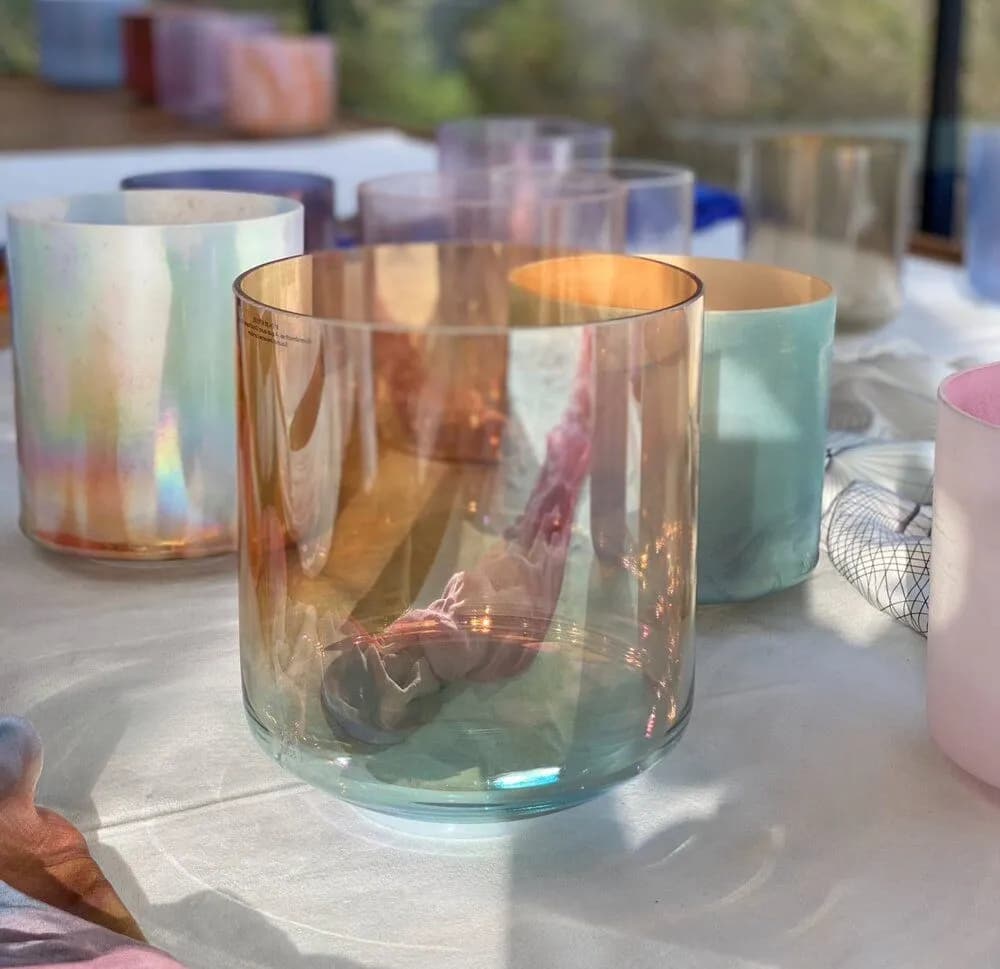
Clear crystal singing bowls are made from highly refined quartz using a different manufacturing process from frosted bowls. Transparent or semi-transparent in appearance, they produce a more focused, articulate tone with greater tonal complexity and longer sustain.
Acoustically, clear bowls tend to generate a brighter fundamental frequency with more pronounced overtones. In a live session, this can create a sensation of the sound extending beyond the initial strike — the tone lingering in the space long after the mallet leaves the bowl.
Because of their clarity and responsiveness, experienced practitioners often choose clear quartz bowls when working with precise intervals, layered harmonics, or more intentional frequency-based sound work.
The trade-off is material behaviour. Clear bowls are generally thinner and more delicate than frosted bowls, making them more sensitive to handling and transport. They also require more precision in production, which is reflected in their price.
They are, in many ways, two different instruments that happen to share the same form.
Frosted bowls tend to offer projection, and durability. Clear bowls offer precision, sustain, and tonal nuance. Neither is better — only better suited to different ways of working with sound.
Crystal vs Tibetan Singing Bowl: The Question Beginners Always Ask
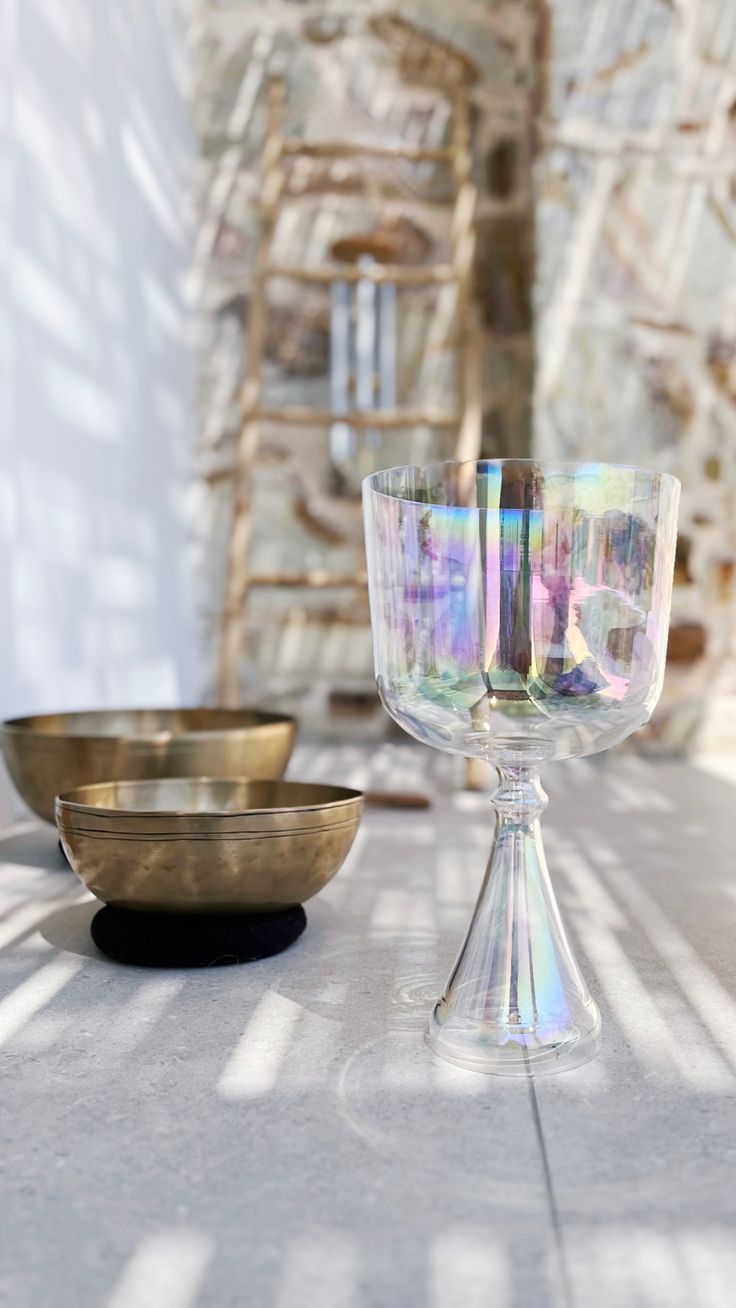
Crystal vs Tibetan singing bowl comes up constantly in buying conversations, and the answer is less subjective than people expect. Tibetan singing bowls are traditionally handcrafted from metal alloys and produce a harmonically rich, layered sound with complex overtones and the characteristic pulsing or rhythmic beating that many people associate with traditional sound meditation. Crystal singing bowls, by contrast, tend to produce a clearer fundamental tone, longer sustain, and a more spacious, less texturally dense listening experience. What your intention is, determines which one serves you.
If you're drawn to ritual, grounding practices, and warm tonal complexity, Tibetan singing bowls often resonate first. If you're working with sustained tones, cleaner intervals, precision frequency protocols, or specific solfeggio applications? Crystal singing bowls are built for that.
Metal bowls bring texture, warmth, and movement. Crystal bowls bring clarity, sustain, and spaciousness. Layered together, they complement one another naturally — each offering qualities the other leaves open.
The question is rarely crystal or Tibetan. It's what experience you want to create.
Singing Bowl Size Guide: Matching Diameter to Purpose
Diameter determines pitch. Larger bowls vibrate more slowly and produce deeper tones; smaller bowls vibrate faster and ring higher. The singing bowl size guide for crystal bowls maps roughly as follows:
- 6 to 8 inches: high octave notes, typically F through B. Well suited for upper chakra work, children's sessions, or practitioners who carry their bowl regularly and need something manageable.
- 9 to 11 inches: the mid-range. Good balance of portability and projection. The most common starting size for home practice, for good reason.
- 12 to 14 inches: deeper, grounding notes, typically C through E. The range preferred for group sound baths where the physical resonance of the tone matters as much as the pitch.
- Over 14 inches: specialist territory. Exceptional projection, very low fundamentals, used by experienced practitioners in immersive therapeutic settings. Not a beginner purchase.
On what size crystal singing bowl should I buy: the room matters as much as the practitioner. A 14-inch bowl in a small bedroom is overwhelming. A 9-inch bowl in a large studio won't carry to the far wall of a group. Size the bowl to the space as much as to yourself.
Alchemy Singing Bowl vs Clear Quartz
Alchemy bowls take clear quartz as a base and fuse additional materials into it during manufacture: precious metals, gemstones, mineral powders. Gold, platinum, rose quartz, amethyst, emerald. Each addition changes the tonal character in ways that are difficult to describe precisely and easier to simply hear. In the alchemy singing bowl vs clear quartz comparison, practitioners consistently report that alchemy bowls carry a different quality of presence, a warmth or emotional weight that seems to relate to the specific material added.
They're significantly more expensive. Not a starting point for most buyers. The time to explore them is once you know your practice well enough to understand what you're adding and why.
Crystal Singing Bowl Set for Meditation: Building Over Time
Resist the temptation to buy a full chakra set immediately. The crystal singing bowl set for meditation is better built gradually, one bowl at a time, with real time spent between additions.
Start with a single bowl at the note most relevant to your current practice focus. Learn that bowl properly: its sustain arc, its overtone profile, how mallet pressure and angle affect the sound, what it does in different room sizes. When you add a second bowl, and you should only add one when the first feels genuinely familiar, you'll know exactly what gap you're filling and why. The resulting set will be coherent in a way that a seven-bowl purchase made in a single afternoon rarely is.
Quartz Singing Bowl Mallet Type: Getting the Sound Right
Most people underestimate how much the quartz singing bowl mallet type changes the instrument's character. Same bowl, different mallet — genuinely different sound.
Suede-wrapped mallets are the standard starting point. Warm, full tone, relatively forgiving of angle and pressure. Rubber mallets hit harder and percussively, with less sustain. Useful for specific striking techniques. Silicone wands pull out clarity and upper harmonics. Crystal or glass wands go further, isolating specific upper partials that suede mallets don't emphasise. Spending an hour with the same bowl and several different mallets is one of the more instructive early exercises available — and it changes how you think about the instrument.
Singing Bowl Tuning Cents Explained
A cent is one hundredth of a semitone. Singing bowl tuning cents explained in practice: a bowl labelled C +5 cents sits five cents sharp of a pure C. C minus 8 cents is slightly flat. For solo personal meditation, a tolerance of plus or minus 10 cents is entirely workable — the deviation is small enough that it won't disrupt the session.
In professional sound baths where multiple bowls play simultaneously, tighter tolerances become more important. Two bowls tuned to the same note in different octaves, but a few cents apart, will produce unintentional beating between them — a rhythmic interference that may or may not serve what you're doing. The more bowls in a set, the more the cent ratings matter.
Chakra Crystal Bowl Set: Buying with Intention
Building a chakra crystal bowl set properly takes longer than most buyers plan for, and that's not a flaw in the process.
Map out the seven notes from C to B. Decide which octave range fits your practice space and therapeutic intentions. Then buy one bowl and sit with it for weeks, possibly months, before adding another. When a second bowl arrives, spend that same period understanding what the pairing does — how the tones interact, where they complement each other, where they create useful friction. By the time you reach seven, you'll have a collection you actually know, rather than a complete-looking set that mostly sits unused.
The bowl that earns daily use is almost always the one that sounded right the first time you rimmed it. That initial response is worth trusting. It turns out to be reliable more often than not.
Once you've chosen your bowl, the benefits article covers what the science says about what these instruments actually do in the body and nervous system.
Frequently Asked Questions
What size crystal singing bowl should a beginner buy?
A six to eight-inch bowl is usually the most versatile starting point. It produces a tone in the mid range, neither too high nor too deep, is manageable to carry, and is easier to sustain than very large bowls. If portability matters to you, aim for the six to seven-inch range paired with a dedicated travel case.
What is the difference between a frosted and a clear quartz singing bowl?
Frosted bowls are made from fused crushed quartz and have an opaque, milky appearance. They produce a full, projecting tone well suited to group settings. Clear quartz bowls are optically transparent and produce a purer, more intimate sound. They tend to cost more and are often preferred for personal meditation or close therapeutic work. Layered together, they complement one another naturally — each offering qualities the other leaves open, creating an immersive soundscape.
What is an alchemy singing bowl?
An alchemy bowl is a crystal singing bowl, usually clear quartz, fused with gemstones, minerals, or precious metals such as gold, platinum, rose quartz, or amethyst. The additional material gives the bowl a more complex tonal character and, for those who work with energy medicine, specific vibrational properties associated with the added element.
Can I use crystal and Tibetan singing bowls together?
Yes, and many experienced practitioners do. The tonal contrast between the two — the earthy complexity of metal and the clean sustain of quartz — can create a rich layered experience within a single session. Starting with one type and adding the other gradually tends to work better than mixing both from the beginning.
How do I know which note to choose for my first crystal bowl?
Start with your intention. If you are drawn to emotional openness or connection, choose an F-note bowl. If grounding is the priority, start with C. If you are unsure, F or G tends to be universally accessible. Our frequency guide has a full chakra-note reference if you want to explore further. If you prefer, you can book a consultation with our Founder for Crystal Bowl Studio, Francesca, before buying.



.5623a955.svg)


.b76148b1.svg)