
If you've searched "singing bowls for anxiety and sleep," you've probably hit a wall of wellness blogs making big claims with zero citations. So let's understand properly: what does the actual research reveal?
The short answer: there's more science than mere assumption, but it's early stage, mostly small trials, and worth understanding rather than oversold.
The Strongest Study So Far: A Randomized Controlled Trial
The most rigorous piece of sound healing anxiety research to date is a 2023 randomized controlled trial published in the European Journal of Investigation in Health Psychology and Education. Researchers compared the relaxation response triggered by Tibetan singing bowl sounds against progressive muscle relaxation and a waiting-list control group in 50 adults selected for high state anxiety [1].
What makes this study worth citing isn't just self-reported mood. It measured brain activity via EEG and heart rate variability (HRV) at four points across a 45-minute session [1]. Both are hard to fake with a placebo effect.
The singing bowl group displayed the strongest physiological signs of relaxation of the three groups. Their brainwave activity changed in a pattern related to calm, and their HRV rose, a marker typically associated with the body entering a restorative state. On self-reported anxiety, both the singing bowl and muscle relaxation groups felt calmer than the control group, but the singing bowl group reported the largest drop [1].
That's the "does sound therapy reduce cortisol" question in a nutshell. This particular study didn't measure cortisol directly, but the HRV and EEG findings point to a real, measurable nervous system shift, not just a placebo mood report.
Singing Bowl Vagal Tone: What the Data Actually Suggests
HRV is essentially a stand in for vagal tone: how well your vagus nerve is regulating the shift between fight or flight (sympathetic) and rest and digest (parasympathetic) states. Higher HRV usually means better vagal tone and a more flexible stress response.
A broader systematic review examining Tibetan singing bowl interventions across multiple studies revealed a consistent pattern. A singing bowl vagal tone study reported significant reductions in anxiety and depressive symptoms, improvements in well-being and quality of life, increases in heart rate variability, and decreases in resting heart rate, with some studies also finding increased delta and theta brainwave activity [3]. These are the slower wave patterns associated with deep relaxation and early sleep stages.
That's the mechanism worth paying attention to if you're specifically asking about sleep. Theta and delta wave activity are part of what your brain does naturally as it transitions toward sleep. It's not proof singing bowls cure insomnia, but it's a valid physiological pathway, not just anecdote.
What About Longer Term Mood, Not Just a Single Session?
An earlier observational study out of UC San Diego looked at a group sound meditation session with 62 participants. Compared with their pre-meditation state, participants reported significantly less tension, anger, fatigue, and depressed mood after the session [2]. Interestingly, people who were completely new to this kind of meditation experienced a significantly greater drop in tension than those who'd done it before [2], good news if you're a total beginner wondering whether you need "experience" for this to work.
The Honest Caveats
Good content on a wellness topic earns trust by not overselling, so here's the balanced picture:
- Sample sizes are small. Most trials involve 50 to 60 participants, not the thousands you'd want for firm clinical guidelines.
- We don't fully know the mechanism. A recent review notes candidly that the reasons behind singing bowls' positive effects aren't fully understood, with brainwave changes, binaural beats, and vibration all proposed as possible explanations [4], a genuinely open research question, not settled science.
- It doesn't work for everyone or every condition. In cancer patient populations specifically, one systematic review found it was difficult for singing bowl therapy to meaningfully influence depression, anxiety, distress, heart rate variability, or quality of life in that more clinically complex group [5], a useful reminder that "relaxation for a generally anxious adult" and "treatment for a serious illness" are very different claims.
The Bottom Line
The research on singing bowls for anxiety and sleep is genuinely promising, especially for acute stress and anxiety reduction, with EEG and HRV data making it more credible than most wellness trends are. It's best seen as a low risk, evidence backed relaxation practice that complements, not replaces, clinical care for diagnosed anxiety disorders or sleep conditions. If you'd like to experience this kind of relaxation in a guided setting, you can explore our sound healing sessions or join one of our upcoming sound bath events.
FAQ
Does sound therapy actually lower cortisol?
Direct cortisol testing is limited so far, but studies measuring related markers like heart rate variability and EEG activity show clear physiological relaxation responses after singing bowl sessions, which is a strong indirect indicator [1][3].
How long does one session need to be to see an effect?
The randomized controlled trial referenced above measured effects building over a 45 minute session, with the biggest changes appearing between the 15 and 45 minute marks [1]. Shorter sessions may still help but haven't been studied as rigorously.
Can singing bowls help with insomnia specifically?
There's no dedicated large scale insomnia trial yet but research showing increased theta and delta brainwave activity, the patterns associated with the transition into sleep, gives a plausible mechanism worth trying as a bedtime wind down practice [3].
Is this backed by real science or is it placebo?
Both self reported mood and objective, non self reported measures like EEG and HRV showed change in the controlled trials [1][2], which suggests it's more than pure placebo, though larger studies are still needed.
Can singing bowls replace therapy or medication for anxiety?
No. Every study referenced here treats sound healing as a complementary relaxation practice, not a clinical treatment. Anyone with a diagnosed anxiety disorder should use it alongside, not instead of, professional care.
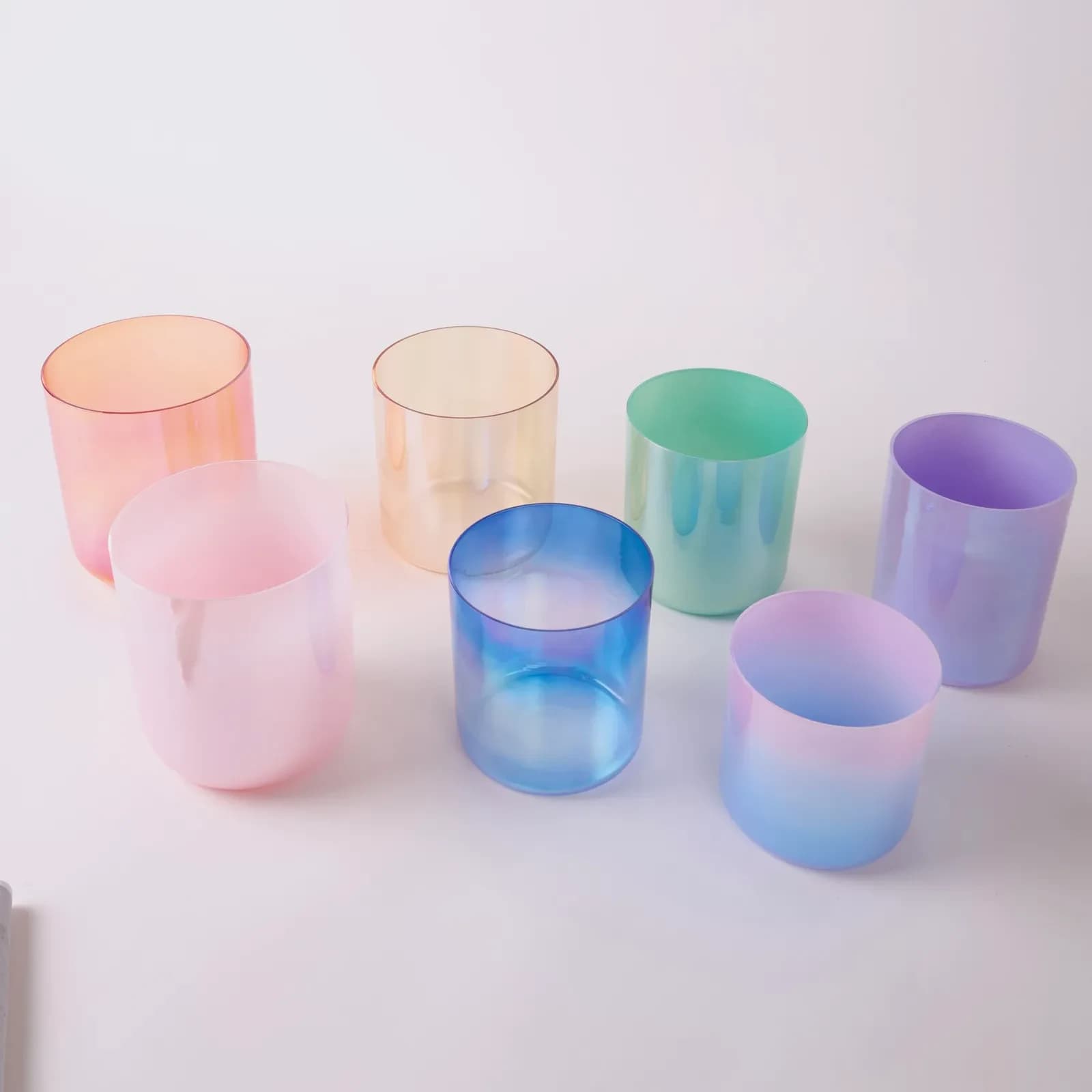
Does it matter if I use a crystal bowl or a metal Tibetan bowl?
Most of the research cited here used traditional metal Tibetan singing bowls [1][2][3]. Crystal bowls haven't been studied as extensively, but they operate on similar acoustic and vibrational principles, so the underlying relaxation mechanism likely applies to both. If you're considering one for home practice, start with our guide on how to choose a crystal singing bowl, or browse the crystal singing bowls in our shop.
References
- Rio Alamos, C., Montefusco Siegmund, R., Canete, T., Sotomayor, J., and Fernandez Teruel, A. (2023). Acute Relaxation Response Induced by Tibetan Singing Bowl Sounds: A Randomized Controlled Trial. European Journal of Investigation in Health Psychology and Education, 13(2), 317 to 330.
- Goldsby, T. L., Goldsby, M. E., McWalters, M., and Mills, P. J. (2017). Effects of Singing Bowl Sound Meditation on Mood, Tension, and Well being: An Observational Study. Journal of Evidence Based Complementary and Alternative Medicine.
- Effects of Tibetan Singing Bowl Intervention on Psychological and Physiological Health in Adults: A Systematic Review.
- Exploring the Healing Power of Singing Bowls: An Overview of Key Findings and Potential Benefits.
- Therapeutic Effects of Singing Bowls: A Systematic Review of Clinical Studies.
This article discusses sound therapy as a general wellness and relaxation practice. If you're managing a diagnosed anxiety disorder or chronic sleep condition, talk to a healthcare provider about how sound based practices might fit alongside your existing treatment plan.




.5623a955.svg)


.b76148b1.svg)